AI Agent Development Services
Our AI agent development services build agents that plan, use your tools and finish real work, with clear limits on what they can touch and a person approving the steps that matter.
Top Rated Plus on Upwork, with 15+ apps shipped for 30+ clients.

Trusted by 30+ clients · 15+ apps built









Overview
What is an AI agent?
An AI agent is software that takes a goal, decides the steps, and carries them out by calling your APIs, databases and business apps. Unlike a chatbot, it acts: it can update a CRM, book a meeting or file a ticket. Good agents work within set permissions and ask a person before risky actions.
Challenges
Problems AI agents solve
Your team is the glue between systems
People spend hours reading emails, checking one system, then updating another. The work is repetitive but needs judgement, so simple automation can't handle it.
Your AI can talk but can't act
You have a chatbot that answers questions, but every real request still ends with "someone from our team will follow up".
You don't trust an agent with your data
You like the idea, but you need to know exactly what an agent can see and change, and who signs off before it does anything that matters.
Services
What our agentic AI development services cover
As an AI agent development company, we take on the whole job, which is what end-to-end agentic AI development should mean: workflow mapping, agent design, integrations, guardrails, evaluation and monitoring. Our agentic AI development services include:
Task agents for one workflow
Lead qualification, support triage, invoice checks or report preparation.
Tool use and function calling
Agents that call your APIs and internal services safely.
MCP servers for your systems
Model Context Protocol servers that give agents controlled access to your data and tools.
Multi-agent systems
Several specialised agents working together when one agent isn't enough.
Human-in-the-loop approvals
Review steps for payments, customer messages or data changes.
Evaluation and observability
Test suites, traces and dashboards so you can see what each agent did and why.
AI agents vs chatbots vs automation vs RPA
These four terms get mixed up. Here is the short version:
| Approach | What it does | Best for |
|---|---|---|
| Chatbot | Answers questions in a conversation | Support FAQs, internal knowledge search |
| Workflow automation | Runs fixed if-this-then-that steps between apps | Predictable, rule-based tasks |
| RPA | Mimics clicks in old software with no API | Legacy systems that can't be integrated |
| AI agent | Decides the steps and takes actions across tools | Tasks that need judgement and several systems |
For predictable, rule-based work, see our business process automation services.
MCP, LangGraph and the frameworks we build with
We pick tools based on the job, not the hype. Common choices:
- Model Context Protocol (MCP): a standard way to give agents access to your tools and data, with permissions you control.
- LangGraph: for agents with multi-step plans, branches and retries.
- LangChain and Mastra: for agents that need retrieval, memory and ready-made tool integrations, in Python or TypeScript.
- Native function calling: OpenAI, Anthropic and Google tool use for simpler agents.
- n8n, Make or Zapier: when an agent needs to trigger existing workflows.
- Azure, AWS or Google Cloud: deployed in your cloud account when data must stay there.
How we keep agents safe and accountable
- Least-privilege access: each agent only gets the permissions its task needs.
- Approval steps: a person confirms high-risk actions before they happen.
- Full traces: every decision and tool call is logged and searchable.
- Evaluation before release: agents are tested against real scenarios, including tricky ones, before they go live.
- Spend limits: caps on model usage and alerts if costs jump.
Process
How our AI agent development services work
- 01
Free consultation and workflow mapping
We pick one workflow and map every step, system and decision.
- 02
Agent and guardrail design
What the agent can do, what needs approval, and how we'll measure success.
- 03
Build and evaluate in short cycles
A working agent early, tested against real cases each cycle.
- 04
Launch with monitoring
Traces, dashboards and a clear process for improving the agent over time.
Case studies
AI agents we've built
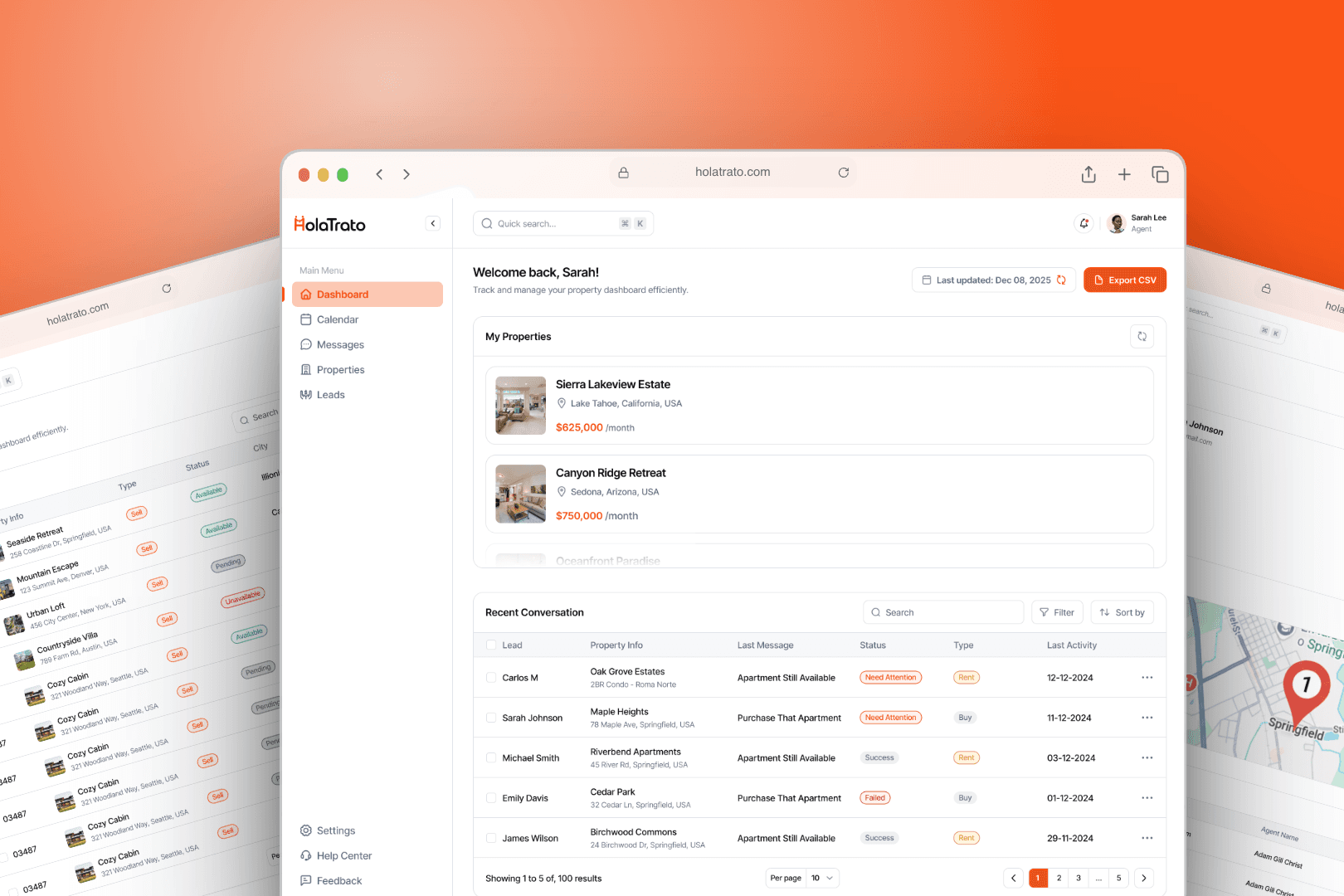
HolaTrato
An AI-first PropTech platform with WhatsApp agents that handle and qualify property leads.
Read the case study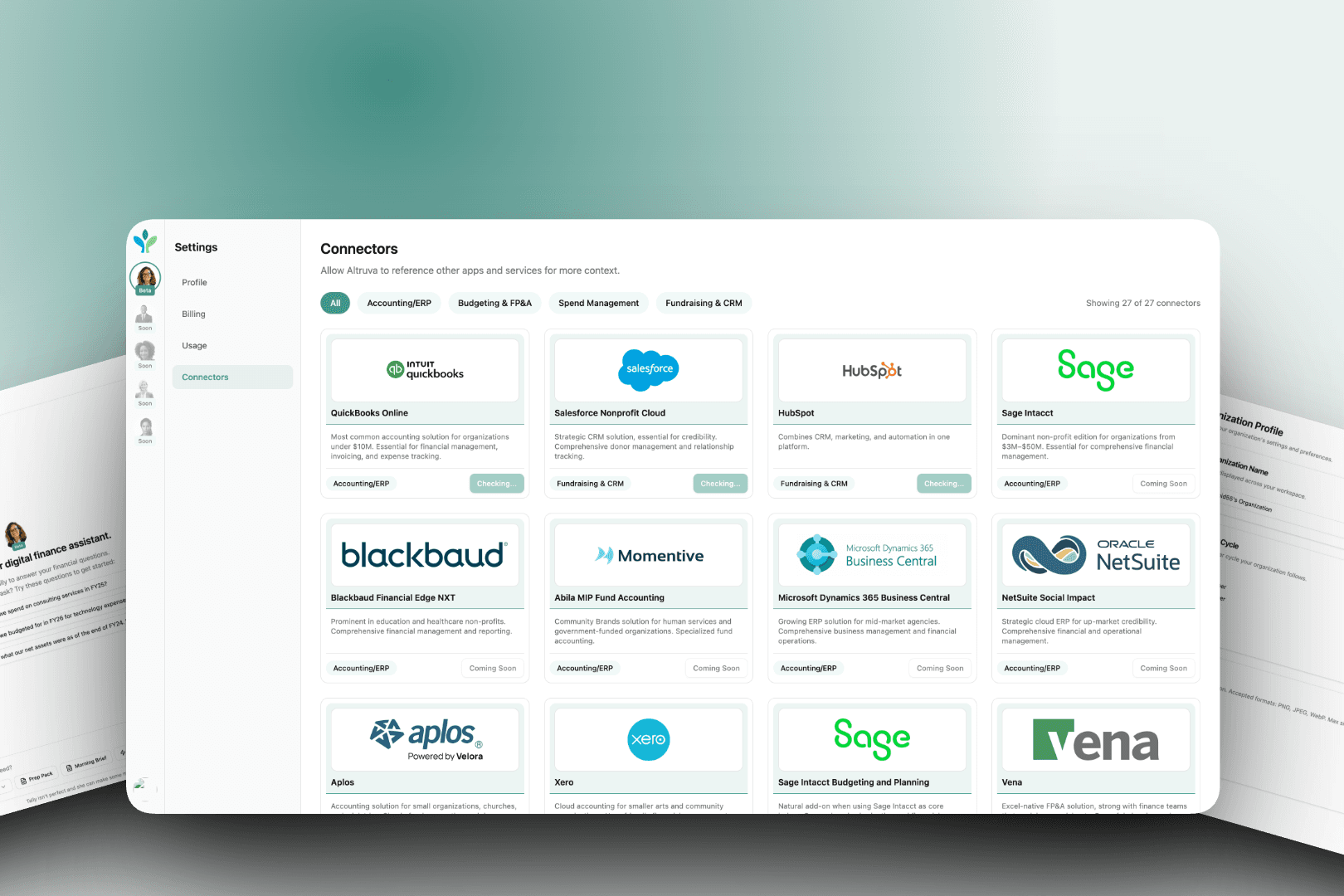
Altruva
An AI finance assistant for nonprofits, built on Microsoft Azure.
Read the case study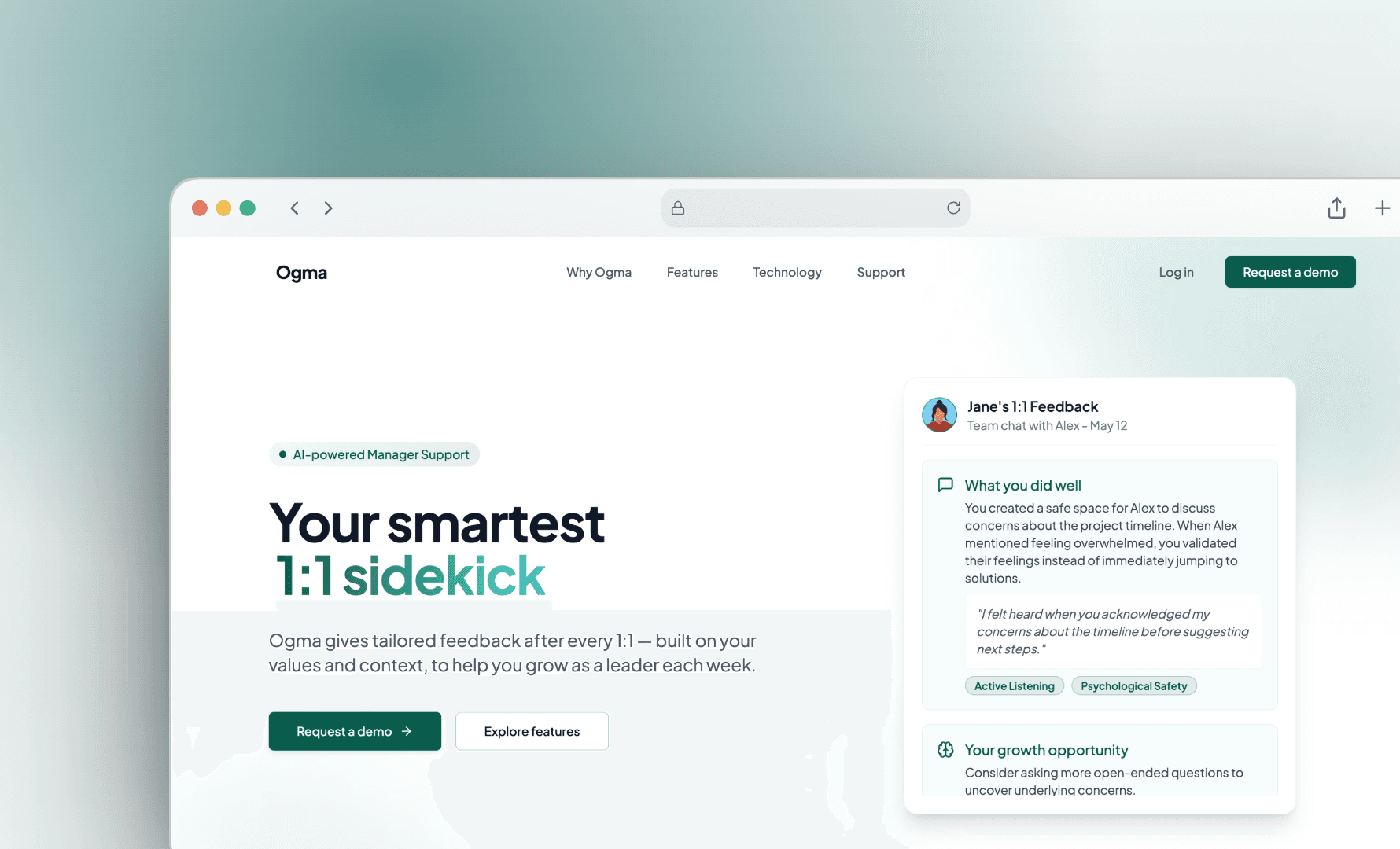
Ogma
AI leadership coaching that joins managers' 1:1 meetings and returns private feedback.
Read the case studyWhy teams pick us as their agentic AI development company: we have shipped agents into live products, and we design for the day something goes wrong, not just the demo. That is the difference between a prototype and real agentic AI development.
“I worked with Outstep from the ground up on a project, and the team was outstanding to collaborate with. Sharp product instincts, deep technical knowledge, and always focused on the user experience. Highly recommended.”
Francisco Escobar
Founder, HolaTrato

AI agent use cases by team
| Team | What the agent does | Where a human steps in |
|---|---|---|
| Sales | Qualifies inbound leads, asks follow-up questions, books meetings | Approves discounts or custom offers |
| Support | Reads the ticket, checks order status, drafts or sends a reply | Reviews refunds and angry customers |
| Finance | Matches invoices to purchase orders and flags mismatches | Approves payments |
| Operations | Checks stock, reorders supplies, updates schedules | Signs off orders above a set amount |
| Real estate | Answers property questions and qualifies buyers on WhatsApp | Handles viewings and negotiation |
FAQ
AI agent development FAQs
What is agentic AI?
Agentic AI describes AI systems that plan and take actions toward a goal, rather than only answering questions. In practice it means agents that use tools, call APIs and complete multi-step tasks under rules you set.
How is an AI agent different from a chatbot?
A chatbot answers questions. An AI agent takes actions: it can look up data, update records, send messages or trigger workflows, usually with approval steps for anything risky.
What does an AI agent development company do?
An AI agent development company maps your workflow, designs what the agent can and can't do, connects it to your systems, tests it on real cases, and monitors it after launch.
What is MCP and why does it matter?
MCP (Model Context Protocol) is an open standard for connecting AI models to tools and data. It lets you give an agent controlled access to your systems once, instead of building custom integrations for every model.
Do we need a single agent or a multi-agent system?
Most teams should start with one agent for one workflow. Multi-agent systems make sense when tasks need different skills or permissions, and only after a single agent is working well.
How do you measure whether an agent works?
We agree success metrics before we build (task completion rate, accuracy, time saved, escalation rate) and track them on a dashboard after launch.
Which tasks are a poor fit for an AI agent?
Tasks that are fully rule-based (simple automation is cheaper), rare tasks, and tasks where a mistake would be expensive and hard to undo without a person checking first.
Can AI agents work with our existing tools?
Yes. Agents connect through APIs, MCP servers or existing automation platforms like n8n and Make. Common targets include CRMs, helpdesks, email, calendars, databases and internal APIs.
Explore more
Related services

AI Development
We design and build AI features and products that work in production: LLM applications, retrieval-augmented generation, chatbots and voice assistants, connected to your data and tools.
Learn more about AI Development
Business Process Automation
We map your manual workflows and automate them with n8n, Make, Zapier or custom integrations, adding AI where it saves real time across sales, support and operations.
Learn more about Business Process AutomationContact
Plan your first AI agent
Tell us which task you want off your team's plate. We'll map it with you on a free call and tell you honestly whether an agent, a simple automation or neither is the right answer.