MVP Development for Startups
We help founders turn an idea into a focused first version, launch it in weeks, and learn from real users before spending more.
15+ apps built for 30+ clients. Top Rated Plus on Upwork.
Overview
MVP development services that get you to real users fast
Our MVP development services take you from an idea to a working first version that real people can sign up for, use and pay for. We help you pick the one problem your product must solve, build only what proves it, and launch in weeks rather than months.
An MVP is not a smaller copy of your final product. It is the least you can build to test your riskiest assumption with real users. So we spend as much effort deciding what to leave out as we do building what stays in.
We write production code from the start, on a stack that can grow. If the MVP works, you keep building on it instead of starting over. If you already have a version made with Lovable, Bolt, Replit or Cursor, we can review it, secure it and get it ready for launch.
Challenges
Problems we solve
Your feature list keeps growing
Every conversation adds another must-have, and the launch date keeps moving. Without someone pushing back, a first version can turn into a year-long build that never meets a user.
You can't judge the build if you don't code
Estimates, tech choices and progress reports are hard to evaluate when you are not technical. You need a team that explains trade-offs in plain language and shows you working software often.
Your AI-built app isn't ready for real users
AI app builders get you a demo fast, but they often skip security, error handling and data rules. Putting that version in front of paying customers puts their data and your reputation at risk.
Services
What we build
Scope and feature priorities
We turn your idea into a short list of core user flows and a clear list of what waits until later. You get a scope and estimate you can plan your launch and budget around.
Clickable designs of the core flows
We design the key screens before writing code, so you can show the idea to users or investors early. Changes at this stage take hours, not weeks.
A working web or mobile MVP
We build the product end to end, including frontend, backend, database, login and payments. It runs on real infrastructure, ready for real accounts and real data.
AI features where they matter
If your product depends on AI, we build the LLM features into the first version, such as chat, document analysis or content generation. We keep them simple enough to ship and easy to measure.
Analytics and feedback loops
We add product analytics and a simple way for users to send feedback. After launch you can see what people use, where they get stuck and what to build next.
Launch and handover
We deploy your MVP, set up domains and monitoring, and handle app store submission when you need a mobile app. You get the code, the accounts and clear notes on how it all fits together.
MVP vs prototype vs proof of concept
These three terms get mixed up, and building the wrong one wastes time and money. Each one answers a different question about your idea.
Many founders only need one of these before raising money or launching. In the free consultation we tell you which one fits where you are right now, even if it is the smaller job.
- Proof of concept: can this be built at all? A small technical test, often thrown away afterward, for a risky integration or AI capability.
- Prototype: will people understand it and want it? Clickable designs or a rough demo for user interviews and investor meetings, with no real backend.
- MVP: will people actually use it, and pay for it? A working product with real accounts and data, released to early users so you measure behavior instead of opinions.
How we decide what goes into your MVP
We start with the assumption that would sink your business if it turned out to be wrong. Then we map the shortest path a user takes to get value from your product, and that path becomes the MVP. Everything else goes on a later list, which we keep so good ideas are parked, not lost.
For each feature on the table, we ask four questions:
- Does it help test the core assumption? If not, it waits.
- Can a manual step or an existing tool cover it for now? Admin panels, reports and onboarding emails often can.
- Will early users notice it is missing? Things like dark mode, detailed settings and social login usually go unnoticed on day one.
- Is it needed for trust or compliance? Secure login, payments and data privacy always stay in.
Built your MVP with Lovable, Bolt or Replit? We make it production-ready
AI app builders and tools like Cursor are a fast way to get a first version on screen. The trouble starts when real users and real data arrive: database tables anyone can read, API keys exposed in the browser, no tests, and code that breaks when you change one thing.
We review what you have, fix the security gaps first, and then decide with you whether to harden the app in place or move it to a clean codebase you control. Either way, you keep the work you have already done.
- Pre-launch security review, including Supabase Row Level Security policies and Firebase rules
- Moving secrets and API keys out of the client and into the backend
- Migrating off Lovable, Bolt or Replit to your own repository and hosting
- Cleaning up data models, login flows and payments before you invite users
Process
How we work
- 01
Free consultation and realistic estimate
We talk through your idea, your users and what you need to learn first. You leave with an honest scope, timeline and estimate for your first version, with no commitment.
- 02
Design the core flows
We design the screens that matter for your main user journey. You review clickable designs before we write code, so changes stay cheap.
- 03
Build in short, transparent cycles
We build in short cycles and show you working software at the end of each one. You test features as they land and adjust priorities as you learn.
- 04
Launch, learn and iterate
We deploy your MVP, support you through launch and watch how early users behave. Then we help you decide what to build, fix or cut next as the product grows.
Technologies
Tech stack
- Next.js
- React
- TypeScript
- Node.js
- Supabase
- PostgreSQL
- MongoDB
- Stripe
- Vercel
- React Native
- Expo
- Flutter
- OpenAI API
- Figma

Trusted by 30+ clients · 15+ apps built







Case studies
Related work
Ogma
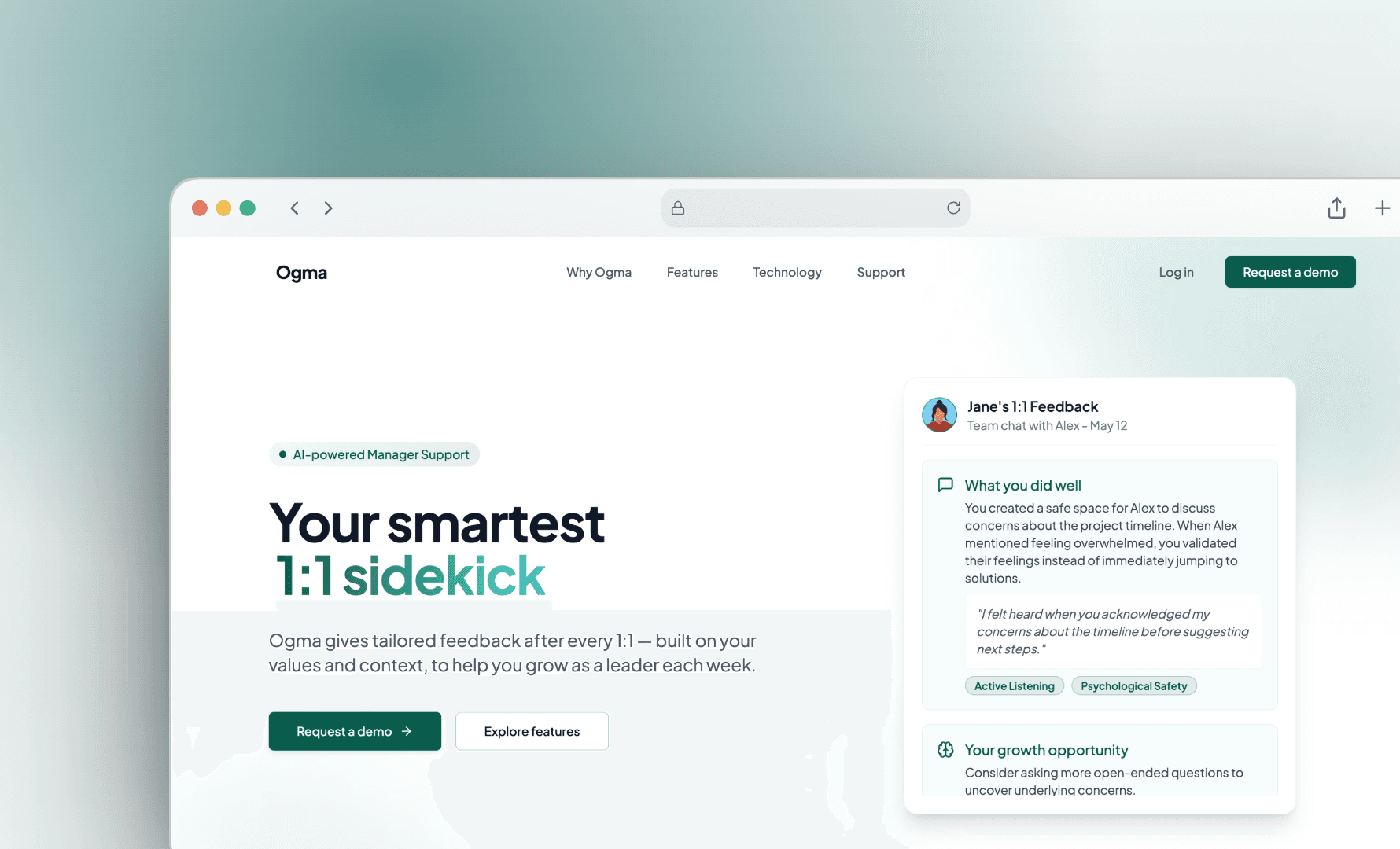
Ogma is a live AI leadership coaching SaaS we built end-to-end - selected for Slush 100 Startups. It joins managers' 1:1 meetings, analyzes conversations using advanced NLP, and delivers private, value-aligned coaching feedback.
Read the case study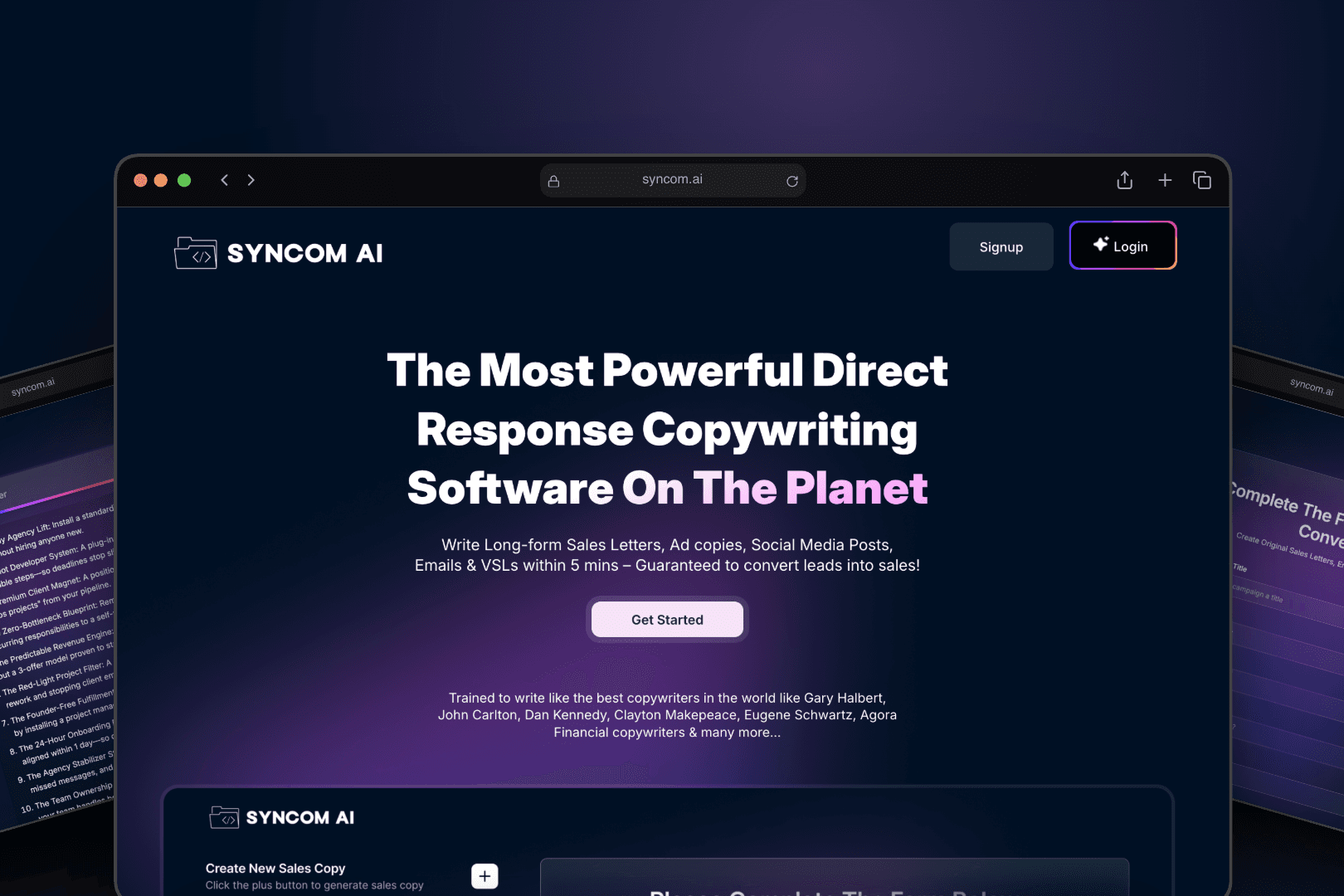
Syncom AI
Syncom AI is a live AI copywriting platform we built end-to-end - trained on Gary Halbert, Dan Kennedy, Eugene Schwartz, John Carlton, and Clayton Makepeace. It generates full sales letters, VSLs, ad copy, and email sequences in 1-5 minutes. Passed heavy testing and now live in active user acquisition.
Read the case study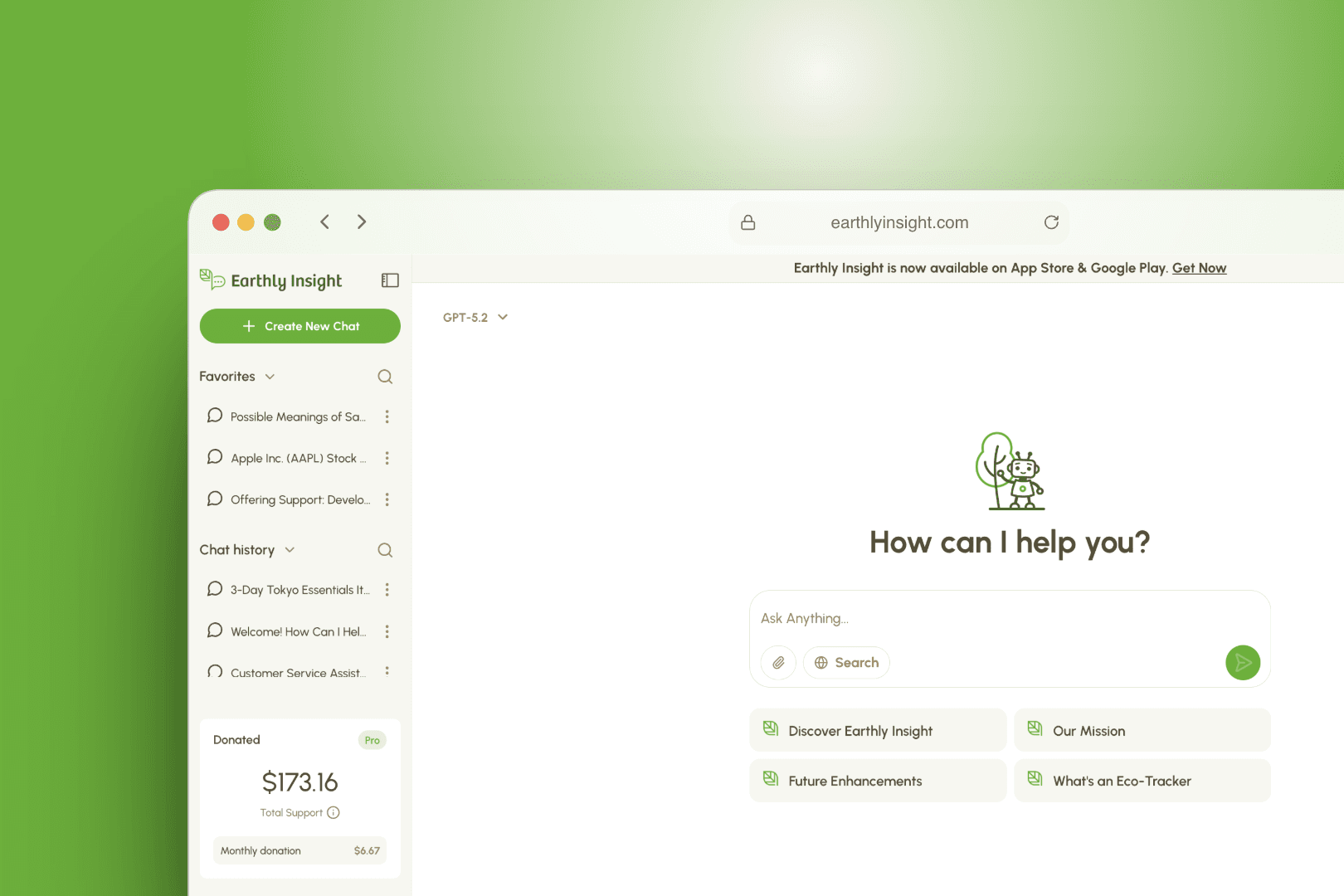
Earthly Insight
Earthly Insight is a live, scaling AI platform we built from scratch on Web, iOS, and Android - now with 6,500+ users and 1,000+ daily active users in just 12 months. Every subscription funds real rewilding through the Global Rewilding Alliance, across 6+ active projects worldwide.
Read the case studyFAQ
Frequently asked questions
What is an MVP?
An MVP, or minimum viable product, is the simplest working version of your product that real users can use. Its job is to test whether people want what you are building before you invest in the full product. A good MVP does one thing well instead of many things halfway.
How long does MVP development take?
A focused MVP usually takes weeks, not months. The timeline depends on how many core flows you need, which integrations are involved, and whether you need web, mobile or both. After the free consultation we give you a timeline based on your actual scope, not a guess.
How much does it cost to build an MVP?
It depends on scope, so we give you a realistic estimate after scoping instead of a generic price range. The biggest cost drivers are the number of user roles and flows, third-party integrations, AI features, and whether you need native mobile apps. Cutting features is the most reliable way to lower the cost, and we will point out where you can cut.
Which features should go into an MVP?
Only the features a user needs to reach the core value of your product, plus what is required for trust, such as secure login and payments. Everything else goes on a later list. A simple test: if removing a feature does not stop you learning what you need to learn, it can wait.
Should I build my MVP with no-code tools or custom code?
No-code and AI builders work well for testing demand quickly, especially before you have users. Custom code makes sense when you handle sensitive data, need complex logic or integrations, or plan to raise money and keep building on the product. Many founders start simple and move to custom code once the idea is validated, and we can help with that move.
Can you fix or finish an MVP built with Lovable, Bolt, Replit or Cursor?
Yes. We review the code, fix security issues such as missing Supabase RLS policies or open Firebase rules, and finish the features that are incomplete. If the codebase is too fragile to build on, we migrate it to a clean stack that you own.
Will my MVP scale after launch?
Yes, if it is built on a solid foundation. We use production stacks like Next.js, Node.js and PostgreSQL, keep the architecture simple at first, and add scaling work when real usage calls for it. Earthly Insight, which we built from scratch, grew to 6,500+ users in its first 12 months.
Do you work with non-technical founders?
Yes, and we explain every decision in plain language. You see working software at the end of each build cycle, so you can judge progress yourself instead of relying on status reports. We also hand over the code and accounts with clear notes, so you can keep building with us or with your own team later.
Explore more
Related services
Web App Development
We build web applications, SaaS products, customer portals and dashboards with Next.js, React, Node.js and PostgreSQL, designed to be fast, secure and easy to grow.
Learn more about Web App Development
Mobile App Development
We design and build cross-platform iOS and Android apps with Flutter, React Native and Expo, from first prototype to App Store and Google Play release.
Learn more about Mobile App DevelopmentContact
Have an idea, or an MVP that needs work?
Book a free call. Tell us what you want to test, and we will give you a realistic scope, timeline and estimate for your first version.