Agentic AI Development
We build AI agents that plan, use your tools and finish real work, with clear limits on what they can touch and people approving the steps that matter.
Top Rated Plus on Upwork, with 15+ apps shipped for 30+ clients.
Overview
What our agentic AI development services cover
We build software agents that take a goal, decide on the steps and carry them out through your APIs, databases and business apps. A chatbot answers a question. An agent answers it, then updates the CRM, books the meeting or files the ticket.
We design each agent around one workflow you can name and measure. It gets only the tools and data it needs, it asks a person before risky actions, and it logs every step so you can see what it did and why.
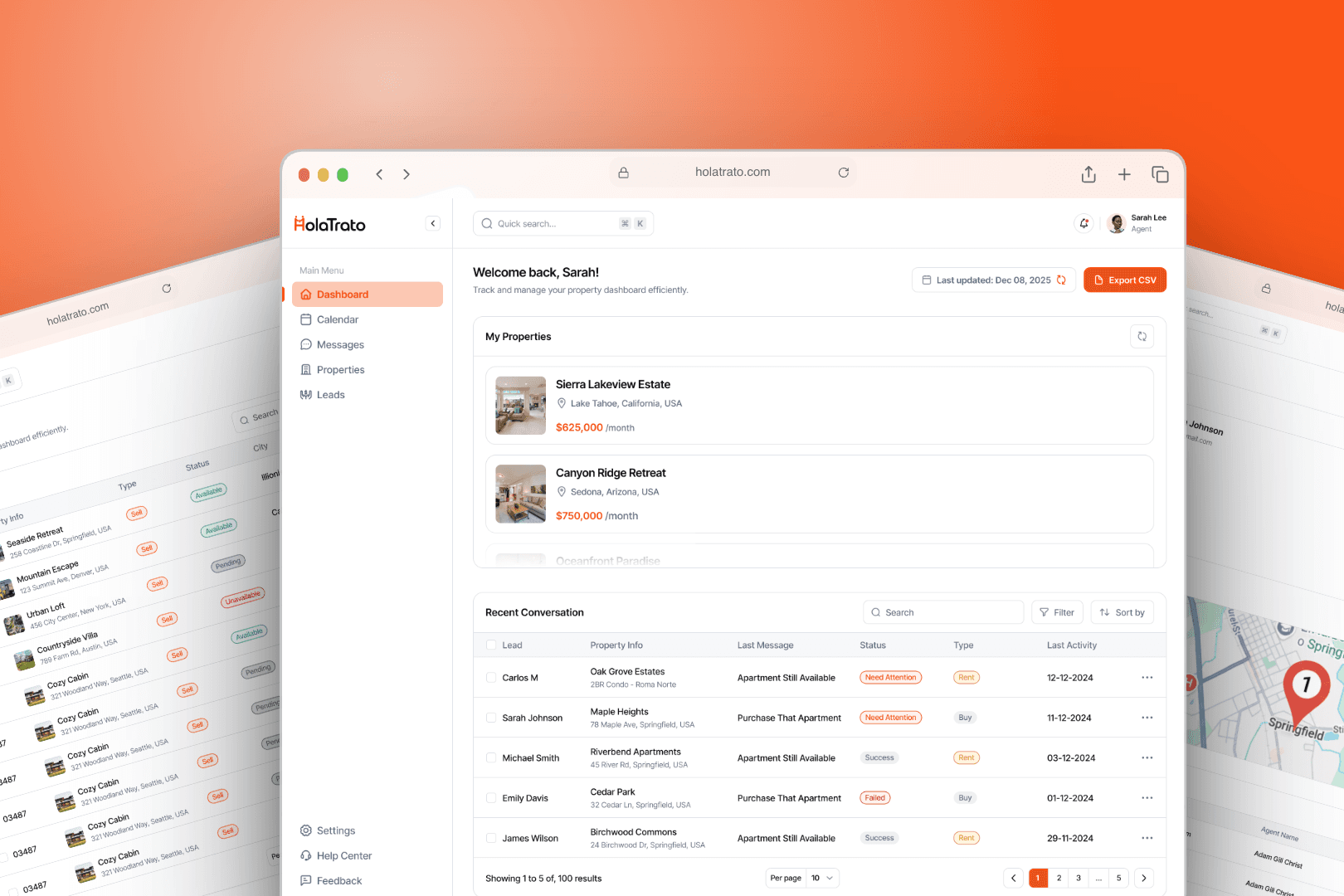
We have shipped this in production. HolaTrato's WhatsApp agents, built on Google ADK, answer property questions, qualify leads and book visits into Google Calendar, while the real estate agent can watch any conversation and take over.
Challenges
Problems we solve
Your team is the glue between systems
People spend the day moving information between the inbox, CRM and calendar. The work needs judgment, so simple rules keep breaking on it.
Your AI can talk but can't act
You have a chatbot or a GPT prototype, but it stops at an answer. Someone still has to do the follow-up in every system by hand.
You don't trust an agent with your data
Giving AI write access to customer records or payments feels risky. Without permissions, approvals and logs, nobody can sign off on it.
Services
What we build
Task agents for one workflow
Agents that own a defined job, such as qualifying leads, triaging support tickets or processing incoming documents. Each one has a clear goal, a fixed set of tools and a rule for when to stop and hand off.
Tool use and function calling
We turn your APIs and internal actions into typed tools the model can call with validated inputs. The agent can look up an order, create a record or send a message, and nothing outside that list.
MCP servers for your systems
We build Model Context Protocol servers that expose your data and actions to any compatible agent or AI client. You write the integration once and reuse it across Claude, ChatGPT and your own agents.
Multi-agent systems
When one agent can't hold the whole job, we split it into specialists, such as a planner, a researcher and a reviewer, under an orchestrator. Each stays small enough to test on its own.
Human-in-the-loop approvals
Agents pause and ask for sign-off before they move money, email customers or delete data. Approval requests show up where your team already works, such as Slack, email or a dashboard.
Evaluation and observability
We build test sets from real cases and score the agent on them before every release. In production, traces show each step, tool call, cost and failure.
AI agents vs chatbots vs automation vs RPA
These four get mixed up, and picking the wrong one is the most expensive mistake in an agent project. The real difference is who decides the next step.
Good systems often combine them: a fixed automation calls an agent for the one step that needs judgment. Part of our agentic AI development services is telling you when an agent is the wrong tool. If your process never varies, plain automation will serve you better.
- Chatbot: answers questions in a conversation. It reads and replies, but it doesn't change anything in your systems.
- Rule-based automation (n8n, Make, Zapier): runs the same fixed steps each time a trigger fires. Fast, cheap and predictable, but it fails when the input doesn't match the rules.
- RPA: software robots that click through screens the way a person would. Useful for legacy apps with no API, but fragile when a screen layout changes.
- AI agent: gets a goal, chooses which tools to call and in what order, and adapts when a step fails or the input is messy. Best for work that needs judgment across several systems.
MCP, LangGraph and the frameworks we build with
The Model Context Protocol (MCP) is an open standard, introduced by Anthropic, for connecting AI models to tools and data. You build one MCP server for your CRM or database, and any MCP-compatible agent or AI app can use it under the same access rules. On Altruva, we connected the Tally finance assistant to QuickBooks Online, Sage Intacct, HubSpot and Salesforce through MCP.
Frameworks run the loop around the model: planning, memory, state and retries. LangGraph models an agent as a graph of steps with saved state, which suits long, branching workflows with a human approval halfway through. The agent SDKs from OpenAI, Anthropic and Google are a lighter way to define agents, tools and handoffs. We built HolaTrato's agents on Google ADK.
We pick based on your models, hosting and how much control the workflow needs. With your tools behind MCP or plain APIs, switching frameworks or models later doesn't mean rebuilding integrations.
How we keep agents safe and accountable
An agent with access to your systems needs the controls you'd give a new hire, plus a few more. We build them into the first version.
- Scoped permissions: each agent gets its own credentials with the narrowest access that works, often read-only to start.
- Approvals for risky actions: payments, deletions and outbound messages wait for a person to confirm.
- Input and output checks: we validate tool arguments and screen responses before anything reaches a customer or a database.
- Audit logs: every prompt, tool call and result is recorded with a timestamp, so you can trace any decision.
- Evals before release: a test set of real cases runs on every change, so a prompt tweak can't quietly break something.
- Fallbacks and handoff: when the agent is unsure or a tool fails, it stops and routes the case to a person. In HolaTrato, real estate agents can see every WhatsApp conversation and step in at any point.
Process
How we work
- 01
Free consultation and workflow mapping
We map the workflow, the systems and tools it touches and where an agent actually helps, then give you a realistic estimate.
- 02
Agent and guardrail design
We define the agent's tools, permissions, approval points and the test cases it must pass before launch.
- 03
Build and evaluate in short cycles
We ship working increments in short, transparent cycles and score each one against real examples, so you see progress and accuracy as we go.
- 04
Launch with monitoring
We go live with tracing and alerts in place, then keep tuning prompts, tools and limits based on what the logs show.
Technologies
Tech stack
- Model Context Protocol (MCP)
- Google ADK
- OpenAI Agents SDK
- Claude Agent SDK
- LangGraph
- OpenAI API
- Claude API
- Azure AI Foundry
- Python
- FastAPI
- TypeScript
- Node.js
- Twilio
- WhatsApp Business API

Trusted by 30+ clients · 15+ apps built









Case studies
Related work
HolaTrato
HolaTrato is a live PropTech platform we built from scratch - an AI-first real estate system where WhatsApp agents handle inbound leads and book appointments automatically. Built with Google ADK AI agents, Meta Business API, Twilio, and full multilingual support. Deployed and live for client use.
Read the case study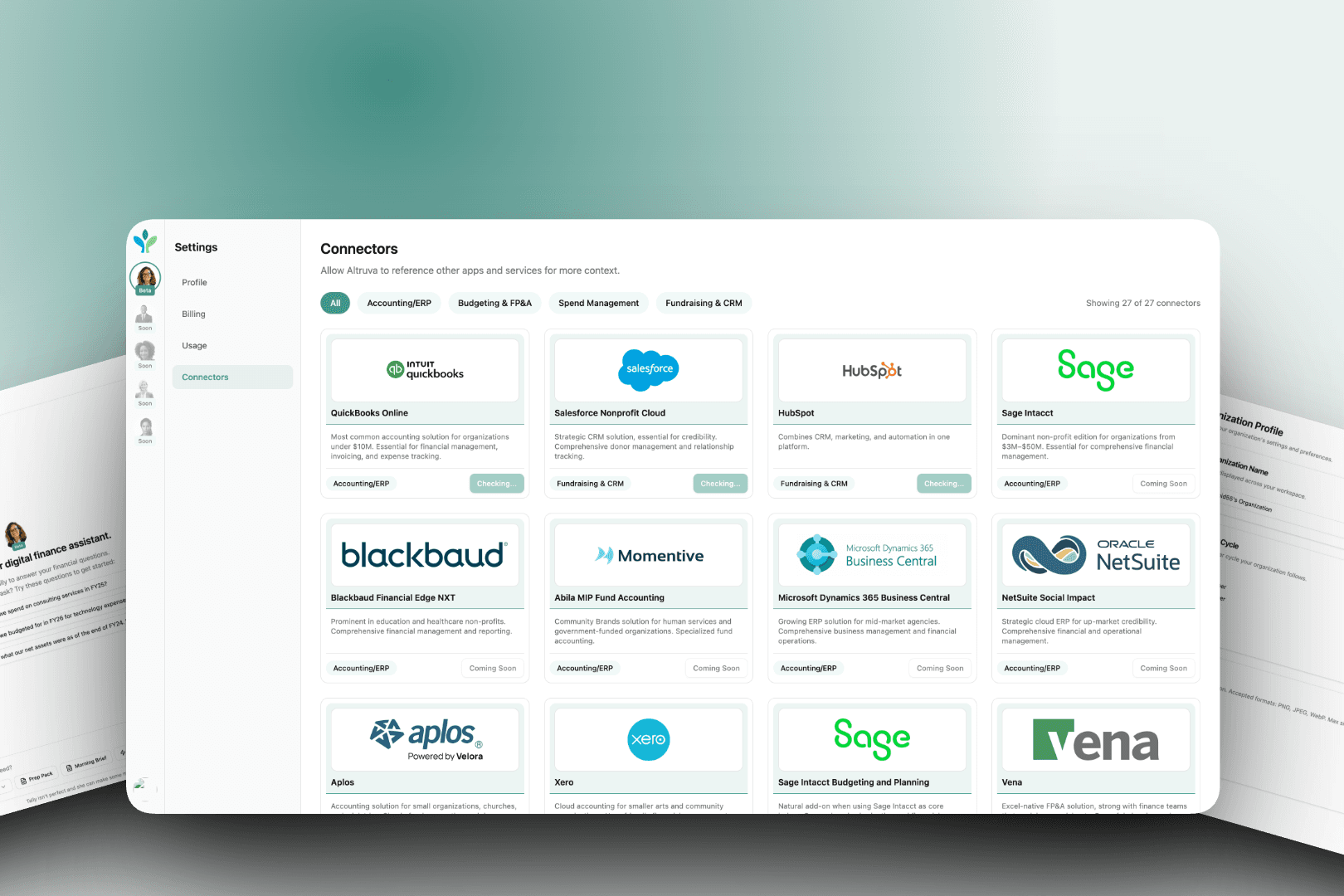
Altruva
Altruva is a live nonprofit FinAI platform backed by $100,000 in Microsoft Azure credits. We built it entirely from scratch - product, design, AI infrastructure, and deployment - giving nonprofits a free AI finance employee named Tally that answers financial questions in seconds.
Read the case study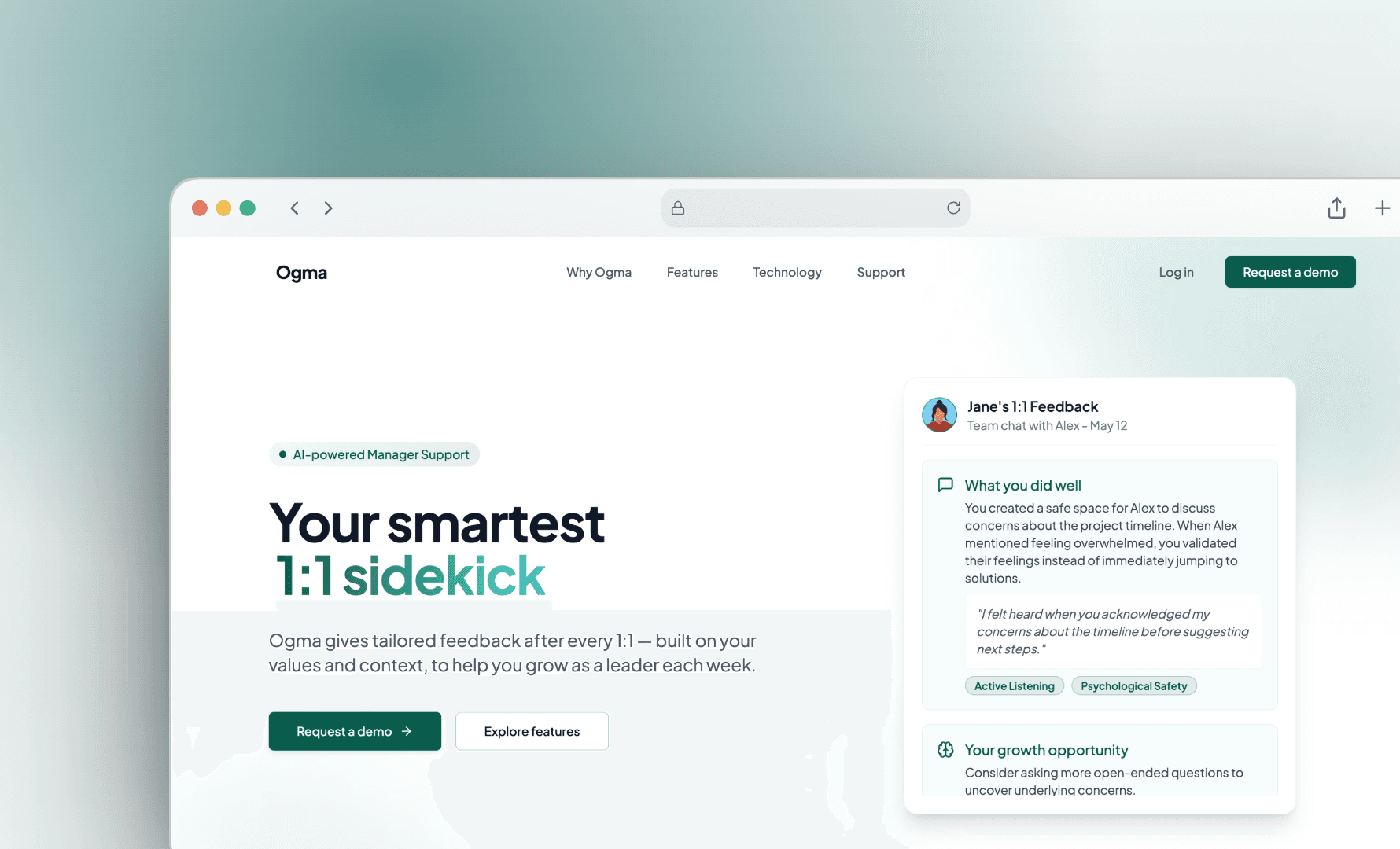
Ogma
Ogma is a live AI leadership coaching SaaS we built end-to-end - selected for Slush 100 Startups. It joins managers' 1:1 meetings, analyzes conversations using advanced NLP, and delivers private, value-aligned coaching feedback.
Read the case studyFAQ
Frequently asked questions
What is agentic AI?
Agentic AI is software where a language model works toward a goal by choosing its own steps and calling tools to carry them out. Instead of only generating text, it can read data, take actions in other systems and check its own results. It still runs inside limits you set.
How is an AI agent different from a chatbot?
A chatbot responds to messages. An agent can also act: look up records, update your CRM, book meetings or start workflows, often across several steps without a prompt for each one.
Which tasks are a good fit for an AI agent, and which are not?
Good fits are repeated tasks that need some judgment, touch a few systems and have a clear definition of done, such as lead qualification or ticket triage. Poor fits are fixed-step processes, which plain automation handles better, and high-stakes decisions with no human review.
What is MCP and why does it matter?
MCP, the Model Context Protocol, is an open standard for connecting AI models to tools and data sources. One MCP server can serve many agents and AI apps under the same access rules, so you don't rebuild integrations every time you change models or vendors. We build MCP servers for internal APIs, databases and SaaS tools.
How do agents access our systems securely?
Each agent gets its own scoped credentials and only the tools it needs. Secrets stay on the server, sensitive actions need human approval, and every tool call is logged. We can start read-only and add write access once you trust the results.
Do we need a single agent or a multi-agent system?
Most projects should start with a single agent and a small set of tools, because it is easier to test and cheaper to run. We move to multiple agents when the job has distinct roles, such as research, drafting and review, or when one agent's instructions and tools grow too large to stay reliable.
How much does it cost and how long does it take to build an AI agent?
Cost and timeline depend on how many systems the agent touches, how much it is allowed to change and how strict the review steps are. We scope agentic AI development services around one workflow first, so a working version ships in short build cycles. You get a realistic estimate after the free consultation, and we track model usage costs from day one.
How do you measure whether an agent works?
We agree on success metrics before we build, such as task completion rate, accuracy on a test set, time saved and how often a person has to step in. Those test cases become an evaluation suite that runs on every change. After launch, traces and logs show how the agent performs on real traffic.
Explore more
Related services

AI Development
We design and build AI features and products that work in production: LLM applications, retrieval-augmented generation, chatbots and voice assistants, connected to your data and tools.
Learn more about AI Development
Business Process Automation
We map your manual workflows and automate them with n8n, Make, Zapier or custom integrations, adding AI where it saves real time across sales, support and operations.
Learn more about Business Process AutomationContact
Plan your first AI agent
Tell us the workflow you want off your team's plate, and we'll show you how an agent could handle it and what it would take to build.