Web App Development
We design and build web apps, SaaS products, customer portals and dashboards that load fast, stay secure and are easy to grow as your user base does.
15+ apps built for 30+ clients, with Top Rated Plus status on Upwork.
Overview
Web application development services for SaaS, portals and dashboards
Our web application development services cover everything it takes to put a working product in the browser: product design, frontend, backend, database, authentication, payments, hosting and support after launch. One full-stack team owns every layer, so nothing gets lost between handoffs.
We mostly build with Next.js, React, TypeScript, Node.js and PostgreSQL. That stack gives you pages that render quickly and can be indexed by search engines, a typed codebase that is safer to change, and tools that plenty of developers already know if you later hire your own team.
Typical projects include multi-tenant SaaS platforms with subscription billing, customer portals, admin dashboards that handle large data sets, and progressive web apps that work well on phones. Every project starts with a free consultation and a realistic estimate.
Challenges
Problems we solve
Your app slows down as it grows
Screens that felt quick with a hundred users now take seconds to load. Slow pages cost you sign-ups, and search engines rank them lower.
Security and access were bolted on late
Login, roles and the separation between customer accounts were added as an afterthought. One wrong permission can show one customer another customer's data.
Every release breaks something
Without tests, typed code or an automated deploy pipeline, small changes cause new bugs. Your team ships less often because each release feels risky.
Services
What we build
SaaS products
We build multi-tenant SaaS platforms with sign-up, team accounts, roles and subscription billing through Stripe. Each customer's data stays separate, and trials, upgrades and cancellations run without manual work.
Customer and client portals
Give your customers one secure place to check orders, documents, invoices and requests. We connect the portal to the tools you already use, so what they see stays current.
Admin dashboards and data-heavy apps
Operations and admin dashboards with charts, maps, filters and tables that hold thousands of rows. Sorting, filtering and pagination run on the server, so screens stay quick as your data grows.
Progressive web apps (PWAs)
PWAs install on a phone's home screen, load quickly on weak connections and can send notifications. They are a practical way to reach mobile users without shipping two app store releases.
Booking and marketplace platforms
Scheduling flows, location-based service areas, payments and payouts for platforms that connect customers with a service. We build the customer app and the admin side together, so both stay in sync.
Hosting, monitoring and maintenance
We deploy to Vercel, Azure, DigitalOcean or your own cloud, with automated builds and monitoring in place from day one. After launch we fix issues, update dependencies and keep tuning performance.
Web app vs website vs mobile app: which do you need?
A website mostly shares information, such as marketing pages, a blog and a contact form. A web app lets people sign in and get something done, like managing an account, running a report or paying for a plan. A mobile app is installed from the App Store or Google Play and can use more of the phone's hardware.
For most products, the web app comes first. It runs on any device with a browser, updates instantly for every user and needs no app store review. Use this as a quick guide:
- Pick a website if visitors read, compare and contact you, but do not need accounts.
- Pick a web app if users sign in, work with their own data or pay for a subscription.
- Pick a PWA if you want that web app to install on phones and load fast on mobile networks.
- Pick a native mobile app if you depend on background location, Bluetooth, heavy offline use or app store discovery. Our mobile app development team handles that.
Our web stack and why we use it
We choose tools that are widely used, well documented and easy for another team to pick up later. This is our default stack for new web apps:
If you already have a stack, we can work in it. We have also shipped projects with MongoDB, Mantine UI and Microsoft Entra ID single sign-on when the product called for them.
- Next.js and React for the interface, with server rendering so pages load fast and search engines can read them.
- TypeScript on the frontend and backend, so many errors are caught before they reach users.
- Node.js with REST or GraphQL APIs for business logic and integrations.
- PostgreSQL or Supabase for data, with row-level security to keep each customer's records apart.
- Stripe for subscriptions, invoices and one-off payments.
- Vercel or Azure for hosting, with a preview deployment for every change so you can review it before it goes live.
Built fast, secure and easy to grow
Speed, security and maintainability are part of the plan from the start, not patched in the week before launch. Here is what that looks like in practice:
- Performance: we watch Core Web Vitals, split code by route, optimize images and cache data so key pages stay fast.
- Authentication and access: email, social or single sign-on login, role-based permissions and data isolation between tenants.
- SEO-friendly rendering: public pages are rendered on the server with clean URLs, metadata and a sitemap.
- Testing: automated tests on the flows that matter most, such as sign-up, checkout and permissions.
- CI/CD: every change is built and checked automatically before it deploys, like the GitHub Actions pipeline we set up for DashCan.
Process
How we work
- 01
Free consultation and realistic estimate
We talk through your users, must-have features and deadlines. You get a clear scope, a recommended stack and a realistic estimate before any work starts.
- 02
Design and architecture
We map the key user flows and design the screens, then plan the data model, authentication and integrations. You see how the app will look and work before we write production code.
- 03
Short, transparent build cycles
We build in short cycles and share a working version you can click through after each one. You always know what is done, what comes next and where the budget stands.
- 04
Launch support and ongoing optimization
We deploy, watch the first weeks closely and fix issues fast. After that we keep improving speed, security and features as your users grow.
Technologies
Tech stack
- Next.js
- React
- TypeScript
- Node.js
- PostgreSQL
- Supabase
- Stripe
- Vercel
- Tailwind CSS
- TanStack Query
- GraphQL
- MongoDB
- Microsoft Azure
- GitHub Actions

Trusted by 30+ clients · 15+ apps built









Case studies
Related work

FinSearches
FinSearches is a production-ready financial search platform we built end-to-end - delivering a complete Figma-to-code redesign with interactive data visualization, Google Maps integration, server-side data tables, and Microsoft Entra ID authentication. Shipped without delays despite a mid-project stack pivot.
Read the case study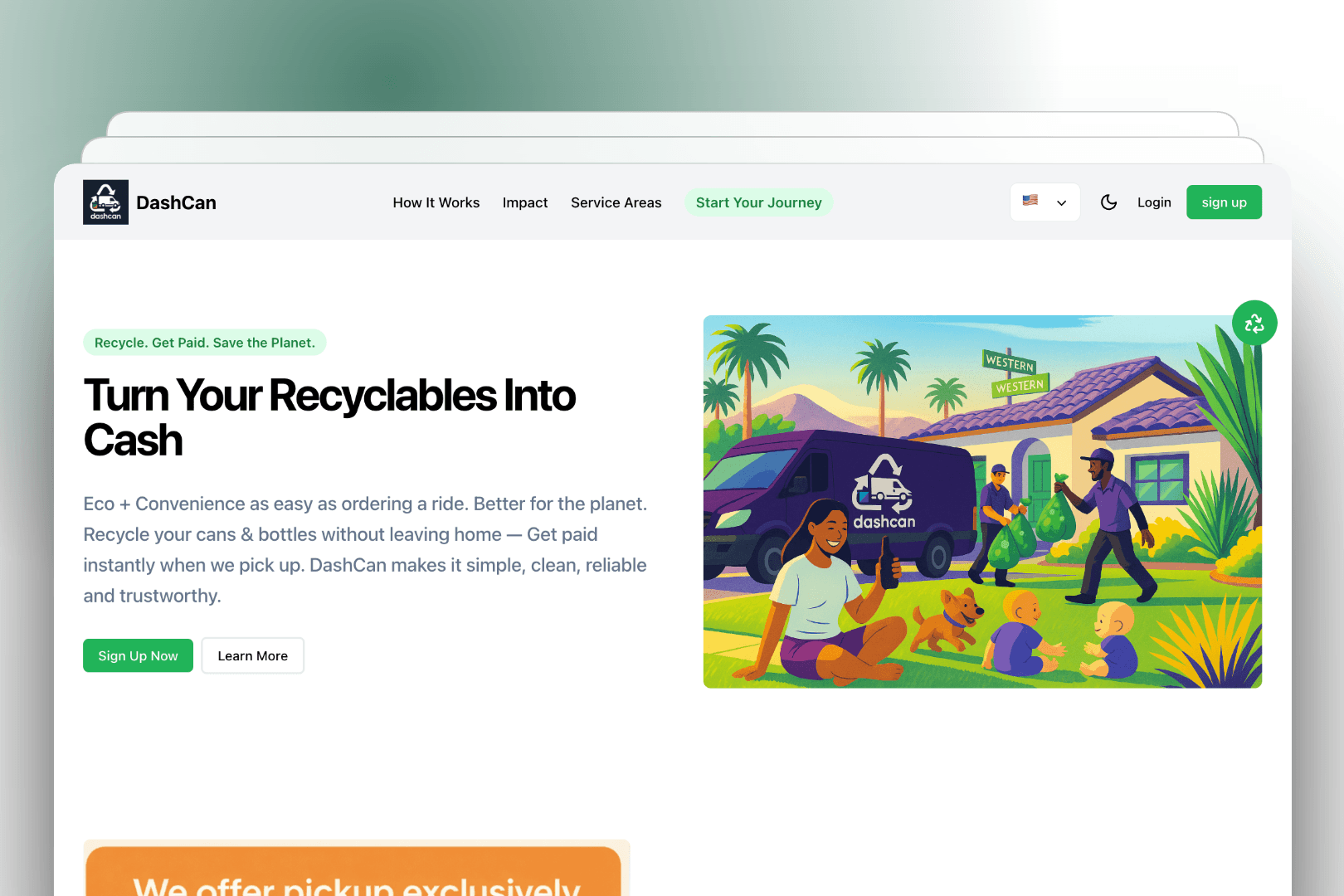
DashCan
A web platform facilitating scheduling and management of recyclable item pickups, connecting users with administrators through an intuitive booking system, service area management, and comprehensive order tracking.
Read the case study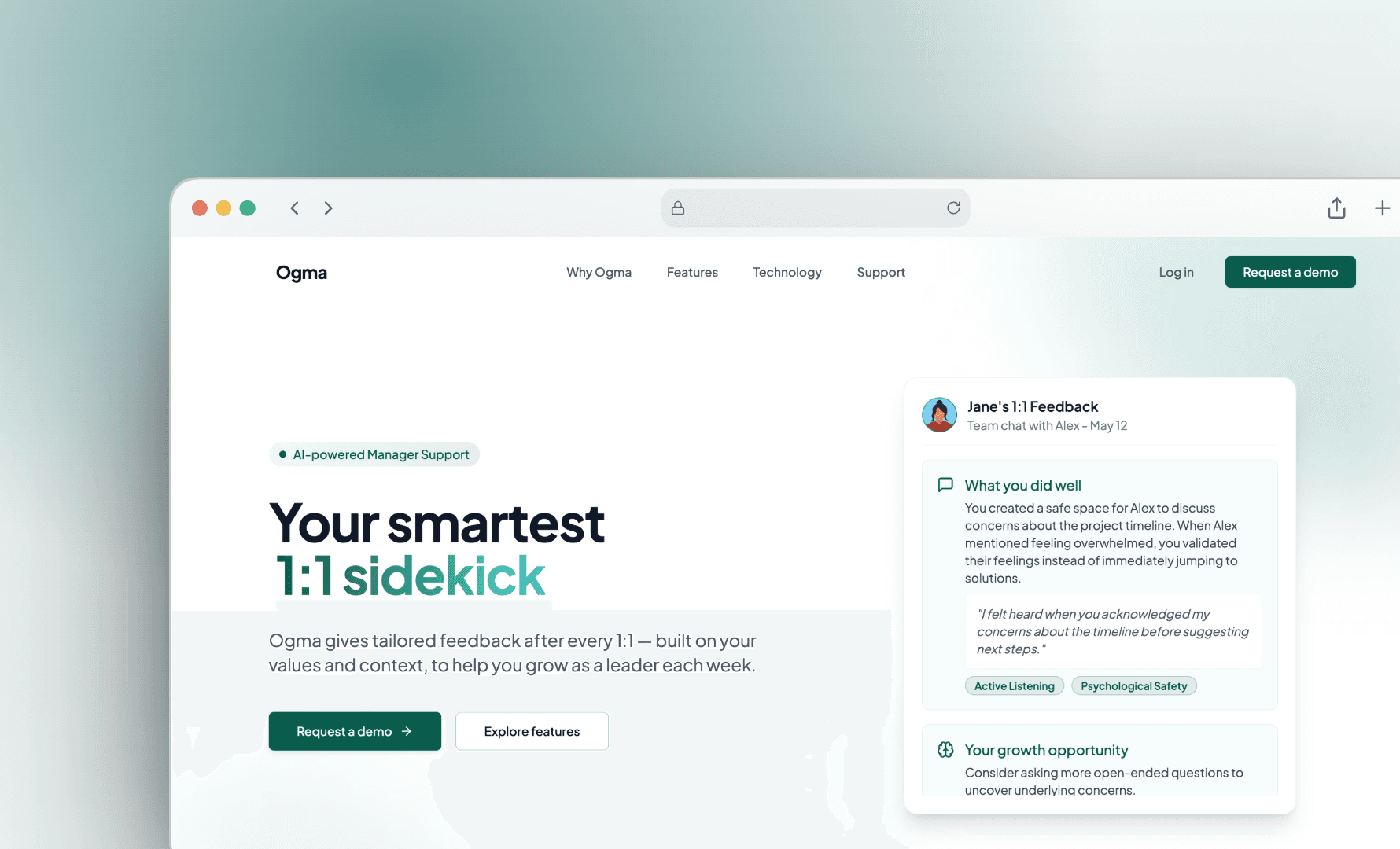
Ogma
Ogma is a live AI leadership coaching SaaS we built end-to-end - selected for Slush 100 Startups. It joins managers' 1:1 meetings, analyzes conversations using advanced NLP, and delivers private, value-aligned coaching feedback.
Read the case studyFAQ
Frequently asked questions
What do your web application development services include?
They cover the full build: discovery, UX and UI design, frontend and backend development, database design, authentication, payments, testing and deployment. We also set up hosting and maintain the app after launch. You can bring us in for the whole product or for one part, such as a new dashboard or billing system.
What is the difference between a web app and a website?
A website mainly presents information, while a web app lets users sign in and work with their own data. If your users need accounts, dashboards, payments or saved work, you need a web app. Many products have both: a marketing website up front and a web app behind the login.
Should I build a web app, a PWA or a mobile app?
Start with a web app if you want one product that works on every device and updates instantly. Turning it into a PWA adds home screen install and better mobile performance for little extra effort. Go native when you need deep device features, heavy offline use or a presence in the app stores.
How much does it cost to build a web app?
It depends mostly on the number of user roles and features, the integrations, the design work and how much data the app handles. A focused portal or dashboard costs far less than a multi-tenant SaaS platform with billing. After a free consultation, we give you a realistic estimate tied to a clear scope.
How long does web app development take?
A focused web app with a few core flows can often launch in weeks, while a full SaaS platform usually takes a few months. Scope, integrations and how quickly decisions get made matter most. Because we work in short cycles, you see working software early instead of waiting for one big release.
Which tech stack do you use for web apps, and why?
Our default is Next.js, React and TypeScript for the frontend, Node.js for APIs, PostgreSQL or Supabase for data, Stripe for payments and Vercel or Azure for hosting. These tools are mature, fast and widely known, so your app stays easy to maintain and to hire for. If you already have a stack, we adapt to it.
Can you improve or take over an existing web app?
Yes. We can fix slow pages, close security gaps, add features or rebuild the parts of an app that have become hard to change. For full codebase takeovers and audits, see our custom software development service, which covers that process in detail.
Do you provide hosting and maintenance after launch?
Yes. We set up hosting, automated deployments and monitoring, then stay on for updates, bug fixes and new features. If you would rather run the app in-house, we hand it over to your team with documentation.
Explore more
Related services

Custom Software Development
We build custom platforms, internal tools and integrations, and take over existing codebases, with a full-stack team that covers design, backend, frontend and launch.
Learn more about Custom Software Development
MVP Development
We help founders cut scope to what matters, build a production-ready MVP quickly, and get it in front of real users, including rescuing MVPs built with AI tools.
Learn more about MVP DevelopmentContact
Ready to plan your web app?
Book a free call and tell us what you want to build. We will suggest a stack, outline the first version and give you a realistic estimate.