AI Development Services
We build AI features and products that answer from your data, fit into the software you already run, and keep working after the demo.
15+ apps built for 30+ clients. Top Rated Plus on Upwork.
Overview
An AI development company that builds for production
Outstep designs, builds and runs AI products for businesses: LLM applications, retrieval-augmented generation (RAG) over your documents, chatbots and voice assistants, and AI features inside your existing product. As an AI development company, we handle the whole job, from the first proof of concept to monitoring in production.
Most AI projects fail in the gap between a good demo and a tool people trust every day. We close that gap with real-data testing, clear accuracy targets, guardrails and cost tracking from the start, so you know what the system can and cannot do before it reaches your users.
We have shipped AI products such as Altruva, a RAG assistant for nonprofit finance teams, and Earthly Insight, a multi-model AI chat app with 6,500+ users. One small team covers strategy, backend, frontend and mobile, so nothing gets lost in handoffs.
Challenges
Problems we solve
The demo worked, the real data did not
A prototype that looks great on sample questions often gives wrong or made-up answers once it meets your actual documents, edge cases and users.
You are not sure where AI is worth it
Every vendor says AI can help, but nobody has shown you which use case will pay off, what it will cost to run, or how to measure success.
Privacy and cost feel like open questions
You need to know where your data goes, who can see it, and what the monthly model bill will look like before you put AI in front of customers.
Services
What we build
AI strategy and proof of concept
We help you pick the use case with the clearest payoff and test it on your own data. You get a working proof of concept, measured results and a realistic plan for production.
LLM applications and generative AI features
We build products and features on large language models, such as writing tools, summarization, classification and structured data extraction. Syncom AI, for example, turns a few campaign inputs into full sales letters, emails and ad copy.
RAG over your company data
We connect AI to your documents, databases and business systems so answers are grounded in your sources and cite them. Access rules carry over, so each user only sees what they are allowed to see.
AI chatbots and voice assistants
We build assistants for customer support, sales and internal help desks on web, mobile and messaging channels like WhatsApp. Each one knows when to hand the conversation to a person.
AI added to your existing product
We add AI features to the software you already have through clean APIs, without a rewrite. Your users get new capabilities inside the screens and workflows they already know.
Document and conversation analysis
We build pipelines that read contracts, reports, transcripts and uploads, then return summaries, scores or structured fields. Ogma uses this approach to turn managers' 1:1 meetings into private coaching feedback.
What an AI development company actually delivers
A good AI development company should hand you more than a model connected to a chat box. You should end up with a working product, evidence that it performs on your data, and a system your team can run and improve.
If you need AI that plans and takes actions across your tools on its own, that is agent work. We cover it in depth on our Agentic AI Development page, and many of our projects combine both.
- A written use case with success metrics agreed before we build
- A test set of real questions or tasks used to measure accuracy
- Production code, infrastructure and documentation that you own
- Dashboards for usage, quality and model cost
- A handover or ongoing support plan, your choice
How we keep AI reliable in production
Language models are probabilistic, so reliability has to be designed in rather than hoped for. These are the controls we put around every AI system we ship.
- Evaluation: we score each release against a fixed test set, so a prompt or model change cannot quietly make answers worse.
- Guardrails: input and output checks block off-topic requests, leaked personal data and answers that are not backed by a source.
- Data privacy: we use model APIs that do not train on your data, private cloud deployments or self-hosted open-source models when needed, and role-based access in retrieval.
- Cost control: we pick the smallest model that meets the quality bar, cache repeated work, and set usage limits and alerts.
- Monitoring: we log prompts, responses, latency and user feedback, so problems show up in a dashboard instead of a customer complaint.
Choosing models: OpenAI, Anthropic, Gemini or open-source
There is no single best model. OpenAI, Anthropic Claude and Google Gemini models each lead on different tasks, prices and context lengths, and open-source models like Llama make sense when data must stay on your own servers or volume makes API costs too high.
We test two or three candidates on your real tasks before committing, and we build a thin layer between your product and the model so you can switch later. Earthly Insight runs OpenAI, Anthropic and Google models side by side in one interface, and Altruva runs on Azure for a client that wanted its AI inside Microsoft's cloud.
Process
How we work
- 01
Free consultation and realistic estimate
We learn your goals, data and constraints, then recommend the AI use case worth testing first, with an honest estimate for time and running costs.
- 02
Design and proof of concept
We design the architecture, retrieval and user experience, then prove it on your real data against the success metrics we agreed.
- 03
Short, transparent build cycles
We build in short cycles with a working demo and evaluation scores at the end of each one, so you always see progress and quality.
- 04
Launch support and ongoing optimization
After launch we monitor quality, cost and usage, and keep improving prompts, retrieval and models as your needs and the models change.
Technologies
Tech stack
- OpenAI
- Anthropic Claude
- Google Gemini
- Azure AI Foundry
- Azure AI Search
- pgvector
- Python
- FastAPI
- Node.js
- TypeScript
- React
- Next.js
- Supabase
- MongoDB

Trusted by 30+ clients · 15+ apps built









Case studies
Related work
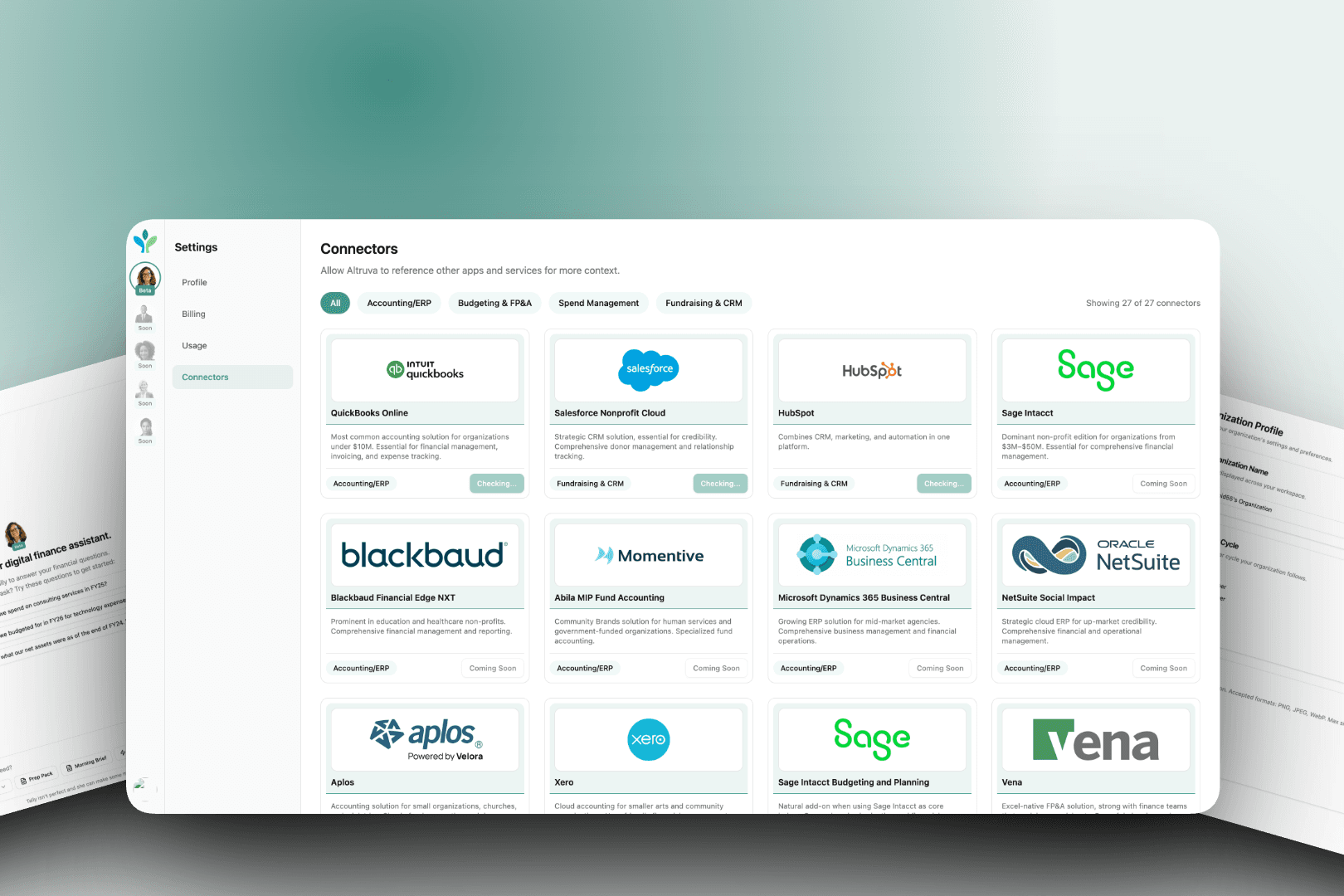
Altruva
Altruva is a live nonprofit FinAI platform backed by $100,000 in Microsoft Azure credits. We built it entirely from scratch - product, design, AI infrastructure, and deployment - giving nonprofits a free AI finance employee named Tally that answers financial questions in seconds.
Read the case study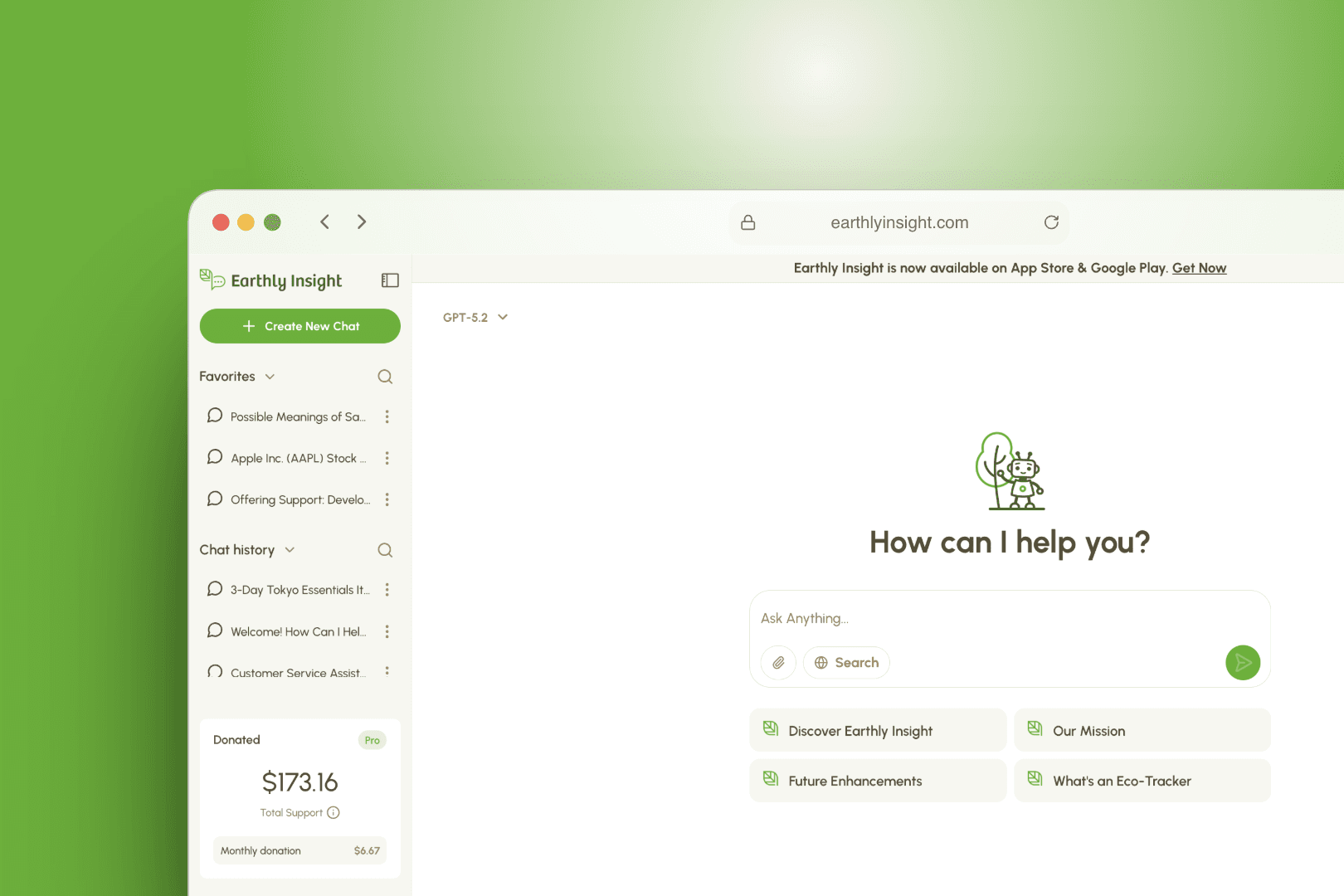
Earthly Insight
Earthly Insight is a live, scaling AI platform we built from scratch on Web, iOS, and Android - now with 6,500+ users and 1,000+ daily active users in just 12 months. Every subscription funds real rewilding through the Global Rewilding Alliance, across 6+ active projects worldwide.
Read the case study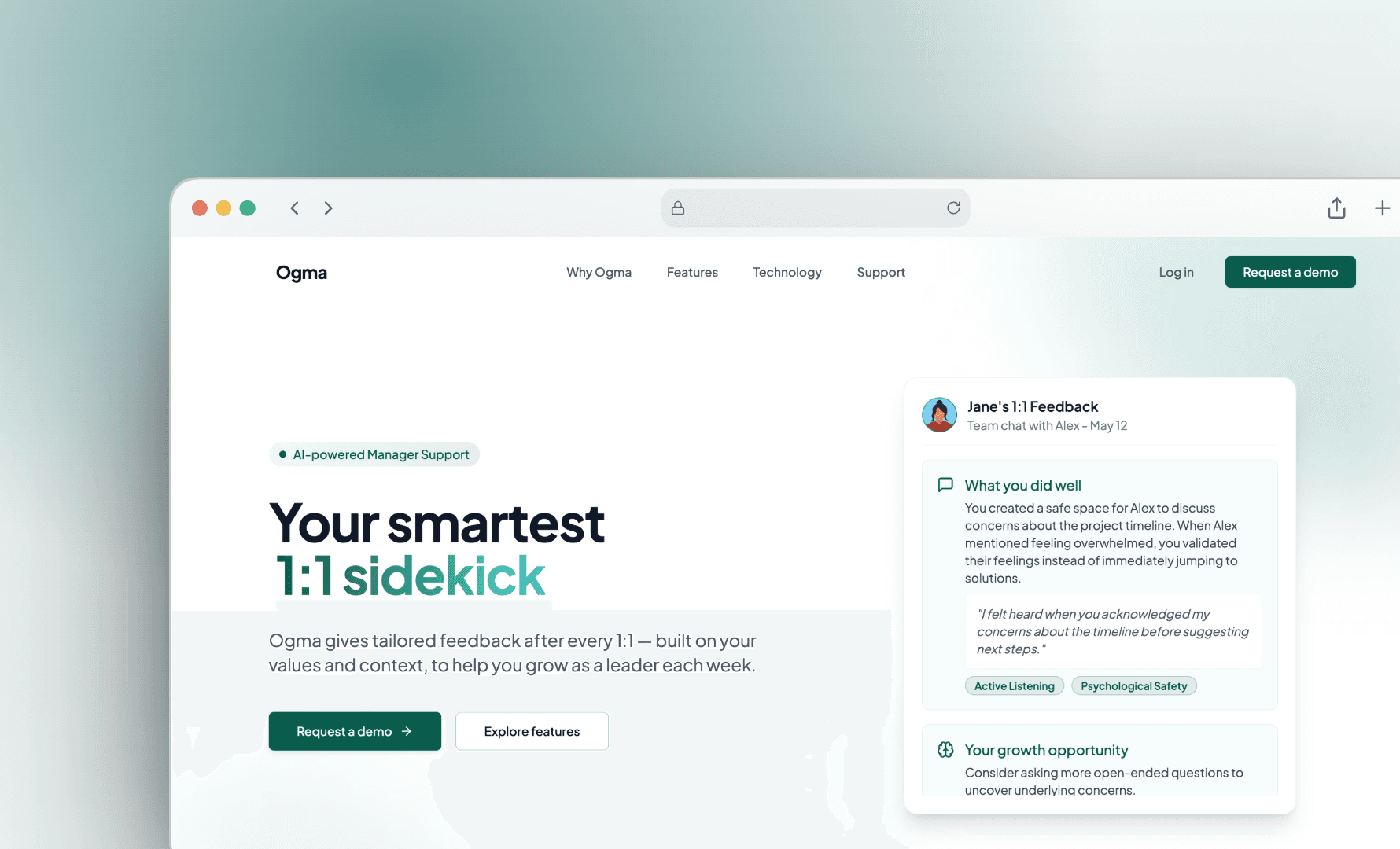
Ogma
Ogma is a live AI leadership coaching SaaS we built end-to-end - selected for Slush 100 Startups. It joins managers' 1:1 meetings, analyzes conversations using advanced NLP, and delivers private, value-aligned coaching feedback.
Read the case studyFAQ
Frequently asked questions
What does an AI development company do?
An AI development company designs, builds and maintains software that uses AI models to answer questions, generate content, analyze documents or hold conversations. At Outstep that covers strategy, proofs of concept, RAG systems, chatbots, AI features in existing products, and monitoring after launch.
How much does an AI development project cost?
Cost depends on the use case, the state of your data, the number of integrations, compliance needs and how much custom interface work is involved. Across the market, small proofs of concept are often quoted in the low thousands to low tens of thousands of dollars, while production systems cost more. We give you a fixed scope and estimate after a free consultation, plus an estimate of monthly model and hosting costs.
How long does an AI proof of concept take?
A focused proof of concept usually takes two to six weeks. The main factors are how quickly we can get access to your data and how many systems it has to connect to. You get a working prototype and measured results, not just slides.
How do you keep our data private?
We use model providers whose business APIs do not train on your data, and we can deploy in your own cloud, such as Azure, or use self-hosted open-source models. Retrieval respects user permissions, sensitive fields can be masked before they reach a model, and we follow the compliance rules you work under, such as GDPR or HIPAA.
Which AI models do you use?
We work with OpenAI, Anthropic Claude and Google Gemini models, and with open-source models when self-hosting fits better. We pick models by testing them on your tasks for accuracy, speed and cost, and we design the system so you can change models later.
Can you add AI to our existing software?
Yes. We add AI features to existing web and mobile apps through APIs and background services, so your current product keeps running while new features roll out. We can work in your codebase or build a separate AI service your app calls.
Do you provide support and monitoring after launch?
Yes. We monitor answer quality, latency, usage and model spend, fix issues, and re-run our evaluation tests whenever prompts or models change. You can keep us on an ongoing plan or take over with full documentation.
Explore more
Related services
Agentic AI Development
We build AI agents and multi-agent systems that plan, call your tools and APIs through MCP and function calling, and hand off to people when they should.
Learn more about Agentic AI Development
Business Process Automation
We map your manual workflows and automate them with n8n, Make, Zapier or custom integrations, adding AI where it saves real time across sales, support and operations.
Learn more about Business Process AutomationContact
Plan your AI project with us
Book a free call and we will help you pick the right first use case and give you a realistic estimate.